Adaptive reuse architects in NSW
New life for old buildings
Adaptive reuse architects in NSW
Some of the best buildings in regional towns are the ones that have outlived their first purpose: warehouses, ambulance stations, old houses and shops. Source Architects are adaptive reuse architects based at 188 Anson Street in Orange, and three of our current and completed projects give an old building a new life. Heritage and adaptive reuse is one of the sectors we work in, and David Sutherland (Registered Architect NSW 7572) and Sally Sutherland (Registered Architect NSW 7587) lead every project personally.
What adaptive reuse architecture involves
Adaptive reuse means changing what a building is used for while keeping what makes it worth saving. A warehouse becomes apartments, a house becomes a restaurant, a service building becomes a place for art. Done well, the new use feels as if it always belonged, and the town keeps a building that tells part of its story.
It is also some of the most demanding work an architect can do. Old structures bring surprises, building codes have moved on, and a change of use usually needs council approval. We plan for all of that from the first visit, working with engineers, heritage specialists and certifiers, so the building's character survives the upgrade.
MC07: a brick warehouse conversion
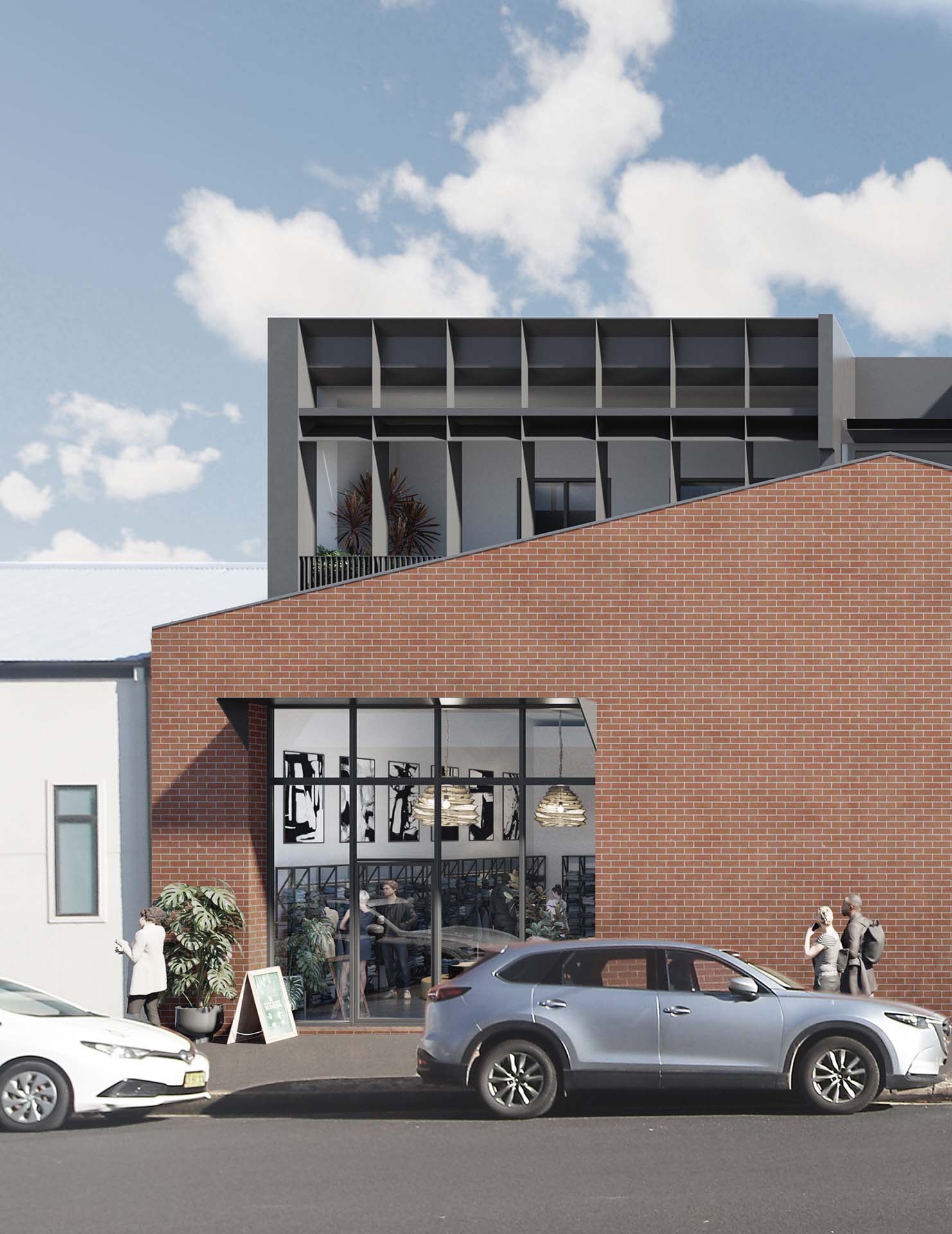
MC07 Apartments is the adaptive reuse of an existing red brick warehouse in Orange. The brief called for two apartments and a ground floor retail space, working within the warehouse's distinctive brick walls. Custom black steel blades run along both street frontages, providing privacy and sun protection and giving the building an almost industrial identity.
The project, approved and awaiting construction, represents a typology that is just starting to be explored in Orange: high end multi residential living. It is a good example of how a warehouse conversion can add to a streetscape rather than simply fill it.
Sweet Sour Salt: a 1920s house turned restaurant
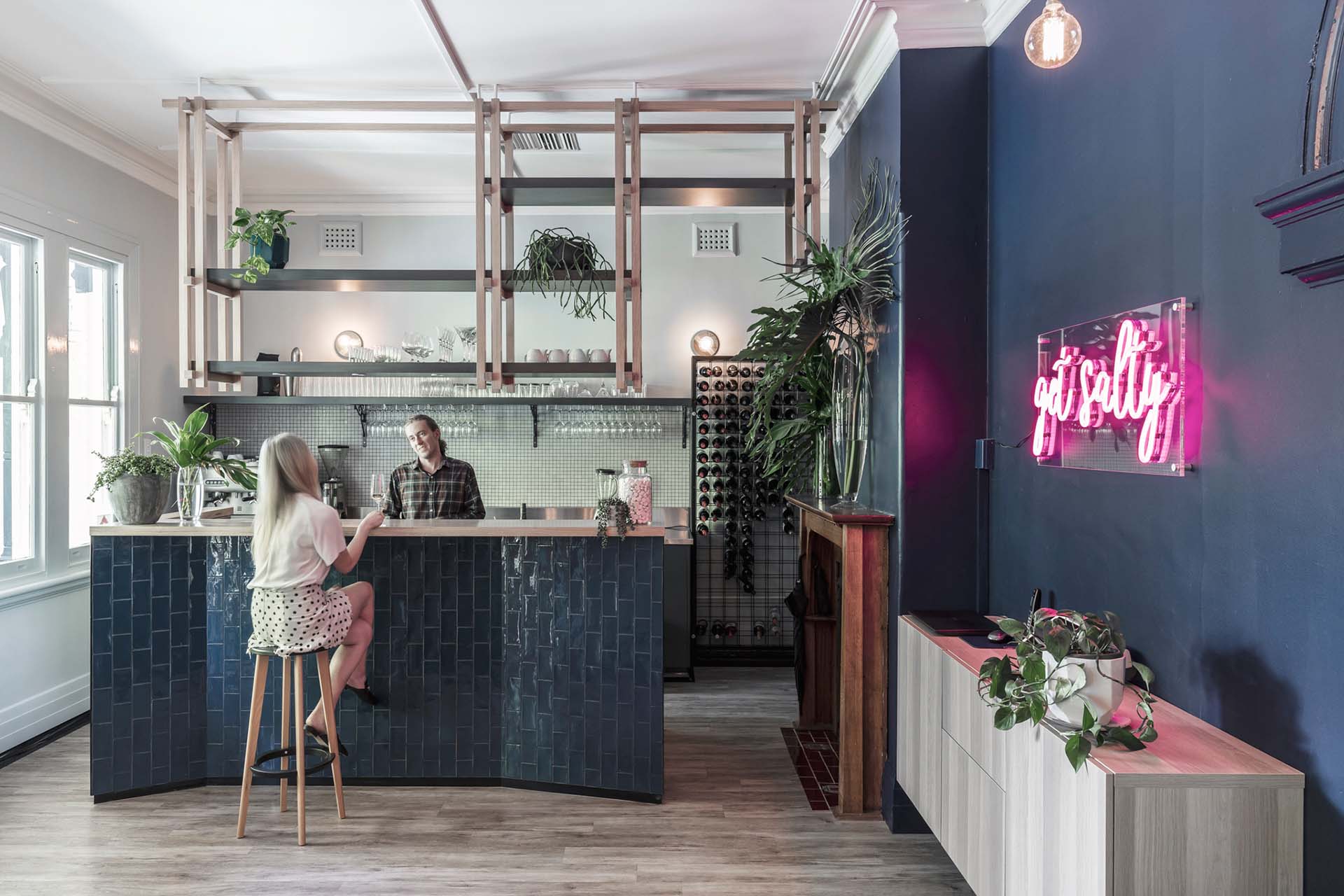
Sweet Sour Salt, a well established modern Asian restaurant in Orange, needed more room. The owners moved into a converted 1920s house near the centre of town that had been used as a restaurant in various guises but had sat empty for some time. We opened up the dining spaces through strategic wall removal, restructured the entry, dining and bar areas, and moved the bar to the front of the building.
Colour, graphics and an innovative low cost lighting solution tie the old rooms together. The restaurant quickly became a destination dining experience in the Central West, and the project was a Dulux National Colour finalist.
Forbes Cultural Centre: an ambulance station reborn
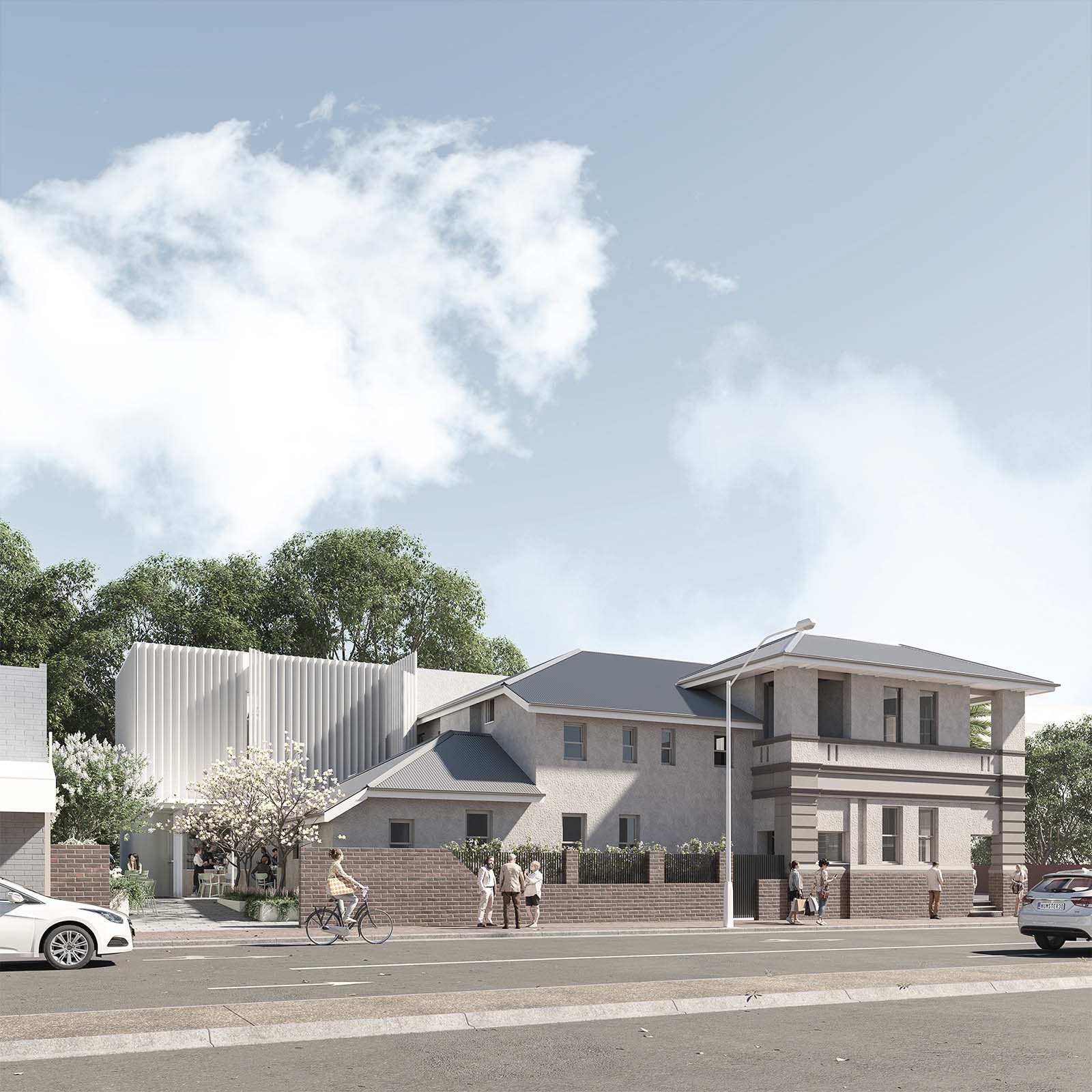
The Forbes Cultural Centre is the brainchild of the Forbes Art Society, the group behind the acclaimed Sculpture Down the Lachlan program, which has seen more than 20 large scale sculptures installed along the Lachlan River between Forbes and Condobolin. Our design, now under construction, restores and extends the historic former Forbes Ambulance Station to hold a series of exhibition spaces, a gallery shop, a cafe and function spaces.
Projects like this show what adaptive reuse can do for a regional town: a building that could have been lost becomes a place people gather.
Adaptive reuse architects for regional NSW
Many adaptive reuse architecture firms are based in the cities. We are based in Orange, and regional towns are full of solid old buildings waiting for their next use. Before recommending a direction, we look at the structure, the history, the planning controls and the feasibility together, so you know what a building can realistically become.
For larger commercial buildings, see also our commercial architecture work, and for heritage houses our heritage architecture page.
Common questions about adaptive reuse
What do adaptive reuse architects do?
Adaptive reuse architects redesign existing buildings for a new use, such as turning a warehouse into apartments or a house into a restaurant. That includes assessing the building, designing the new use, and managing approvals and construction.
Does a change of use need council approval?
In most cases, yes. A change of use usually needs development approval, and the building may need upgrades to meet current codes. We prepare the application, including the Statement of Environmental Effects, and coordinate the consultants involved.
Can a heritage building be adapted for a new use?
Often, yes. Adaptive reuse is one of the best ways to keep a heritage building in use. The Forbes Cultural Centre, in the historic former Forbes Ambulance Station, is one of our current examples.
Do you do warehouse conversions?
Yes. MC07 Apartments, approved and awaiting construction, converts a red brick warehouse in Orange into two apartments above a ground floor retail space.
Where do you work?
We are based at 188 Anson Street, Orange NSW, and work across the Central West and wider NSW.